
Description
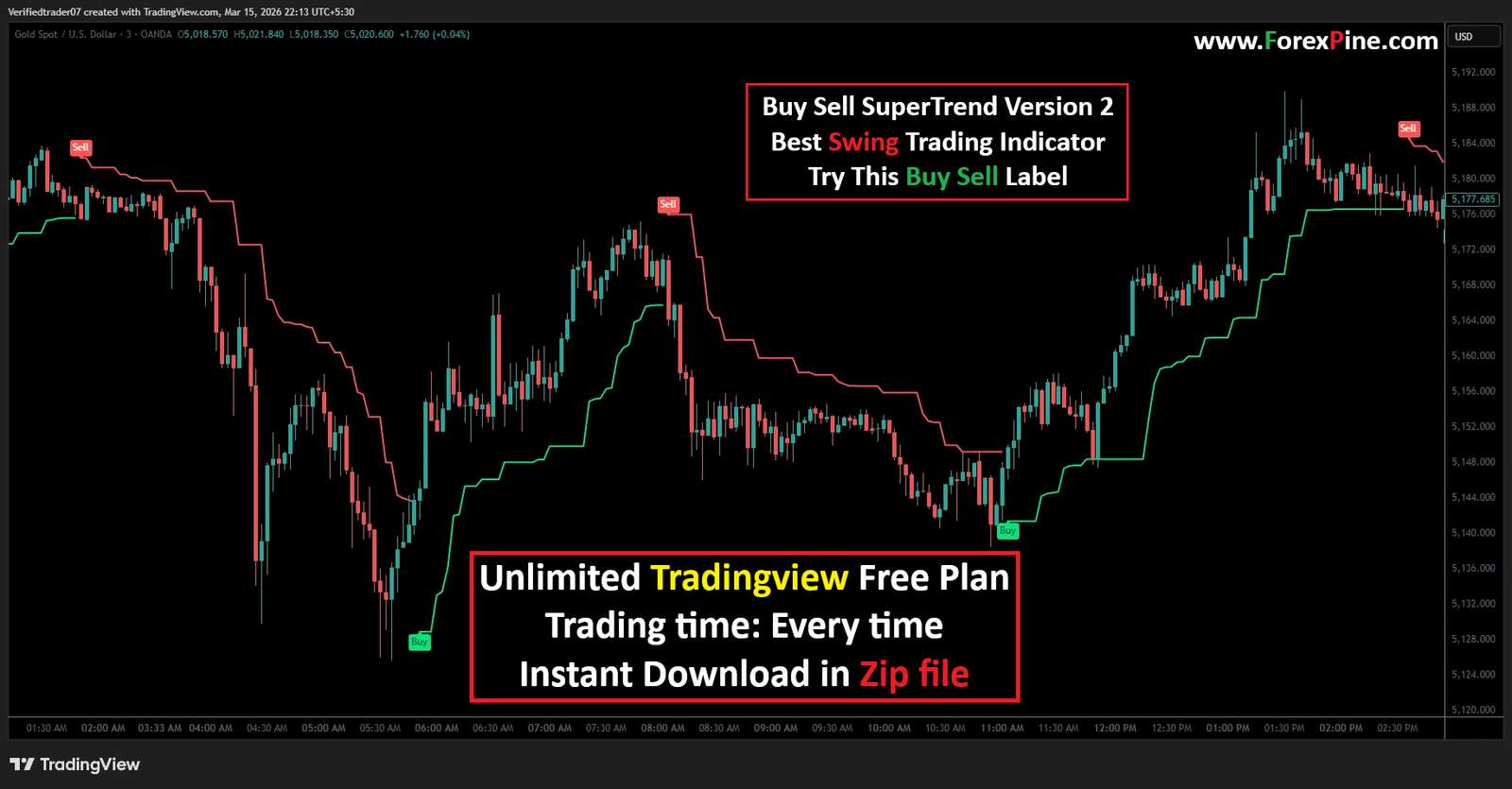
The “Buy Sell SuperTrend Version 2” is a trend-following indicator that provides clear entry and exit signals. green for an uptrend and red for a downtrend. A “BUY” signal is generated when the price crosses above the line, and the line turns green. A “SELL” signal is generated, and the line turns red. This visual tool helps traders quickly identify the dominant market direction and potential trading opportunities.
How to Use This Indicator – Full Details
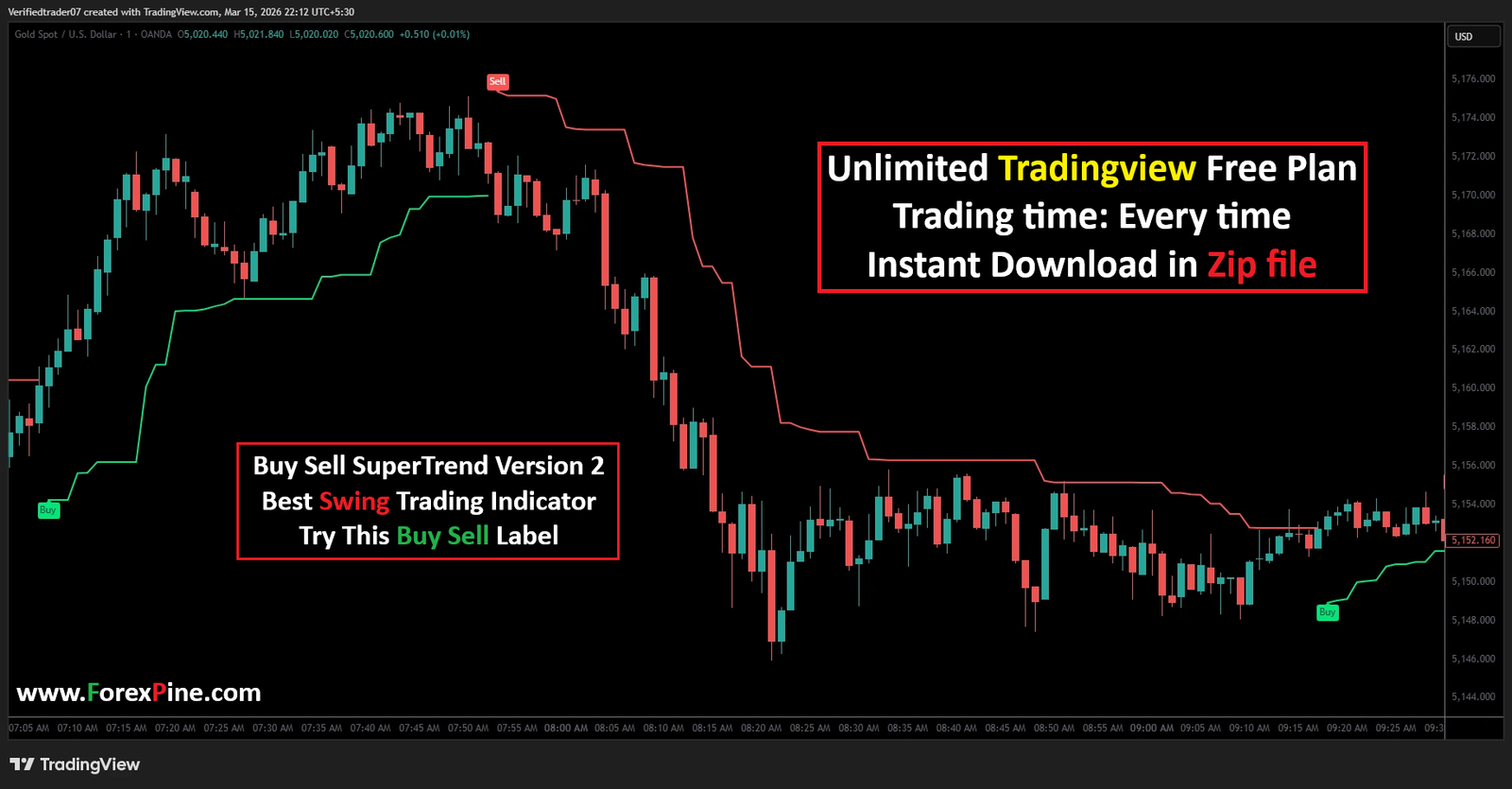
1. Crystal‑Clear Buy & Sell Signals
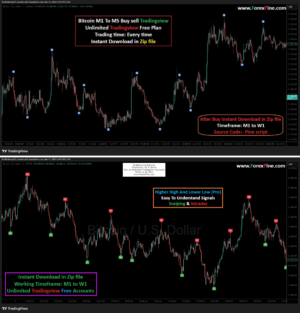
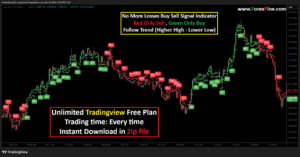
- When the green line (Buy) appears below the candles → it’s a strong signal that price is likely to move upward.
- When the red line (Sell) appears above the candles → it’s a clear warning that price may drop.
👉 You don’t need to overthink — the indicator gives you direct entry and exit points.
2. Perfect for Scalping & Intraday Trading
- On short timeframes (like 3‑minute charts), this indicator shines.
- Quick signals mean you can catch small moves in gold, forex, or crypto and turn them into consistent profits.
⚡ Fast traders love it because it reduces hesitation and increases confidence.
3. Customer‑Attracting Benefits
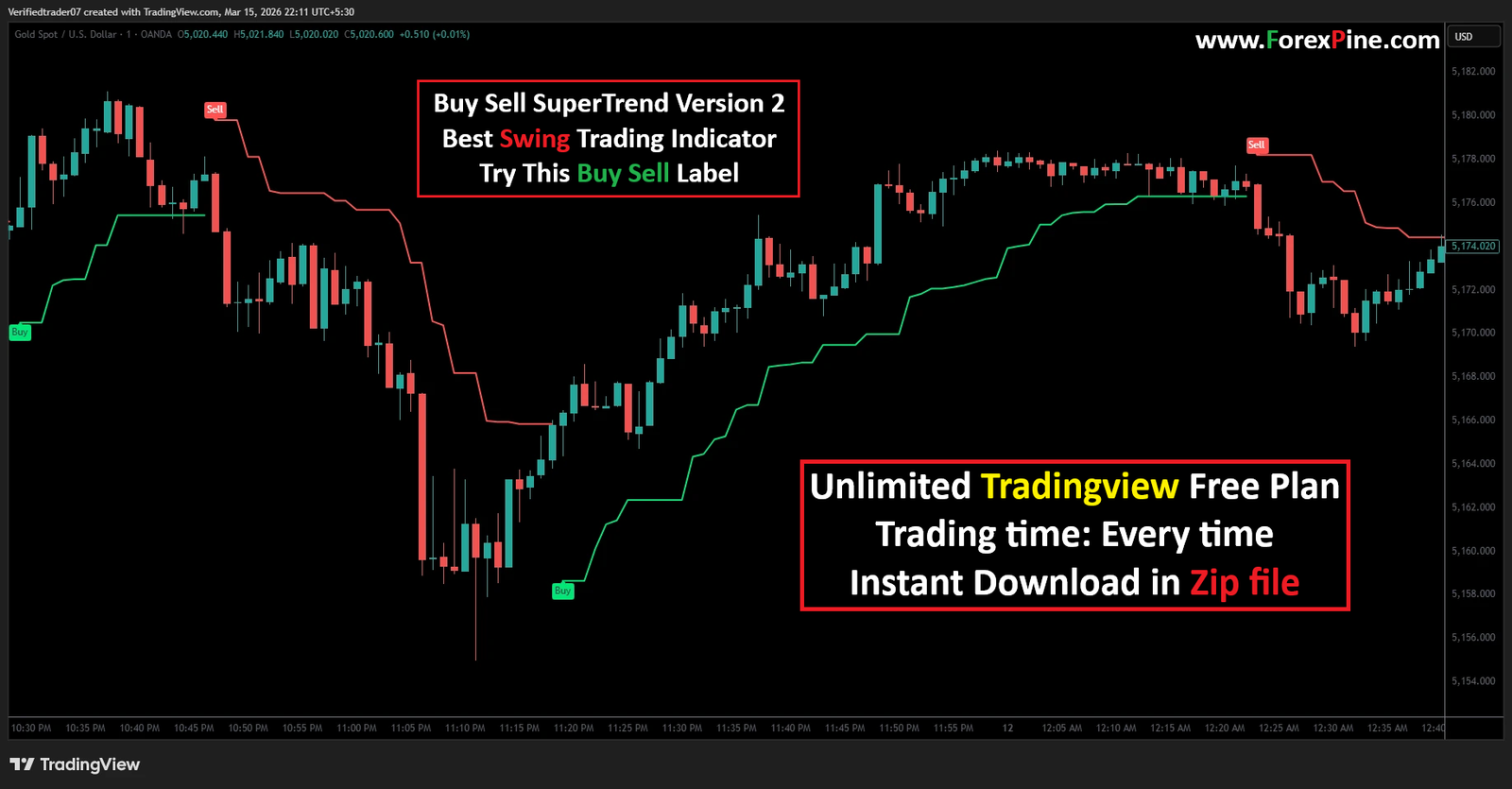
- Saves Time: No need to analyze dozens of indicators — this one shows you the action instantly.
- Boosts Confidence: Clear visual signals remove confusion and fear.
- Works Across Markets: Gold, silver, forex, crypto — wherever you trade, it adapts.
- Beginner‑Friendly, Pro‑Approved: Easy enough for new traders, powerful enough for experts.
4. How to Use Step‑by‑Step
- Open your chart (e.g., TradingView) and apply the indicator.
- Watch for green Buy signals below candles → enter long trades.
- Watch for red Sell signals above candles → enter short trades or exit longs.
- Always confirm with market structure or support/resistance for higher accuracy.
- Manage risk with stop‑loss just below/above the signal line.
How to Use the Buy/Sell Indicator for Entries and Exits
The indicator is designed to give straightforward signals, making it easier to identify potential trend changes. Here’s a point-by-point guide on how to use it:
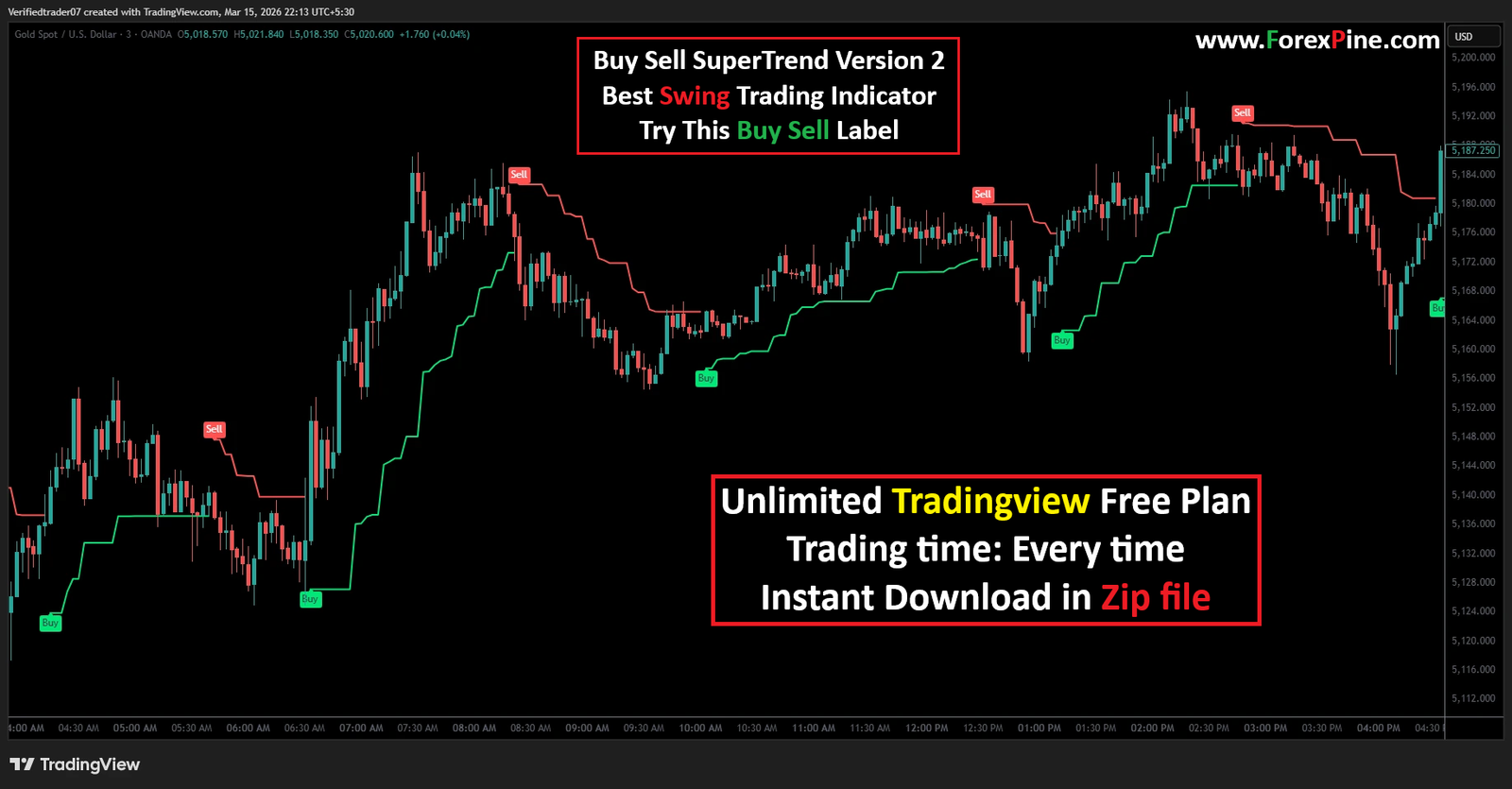
- Buy Signal (Entry): A buy signal appears when the indicator line turns green and a “BUY” label appears below the price. This suggests a potential uptrend is starting. An entry would typically be made at or shortly after this signal appears, as shown on the chart.
- Hold (During Uptrend): Once a buy signal is given, you would hold the position as long as the indicator line remains green and stays below the price candles. This green line acts as a dynamic support level.
- Sell Signal (Exit/Entry): A sell signal is generated when the indicator line turns red and a “SELL” label appears above the price. This suggests a potential downtrend is starting. You would typically exit your long (buy) position here. Alternatively, this can be an entry point for a short (sell) position if you are trading in a downtrend.
- Hold (During Downtrend): After a sell signal, you would hold your short position as long as the indicator line remains red and stays above the price candles. This red line acts as a dynamic resistance level.
- Second Buy Signal (Exit/Entry): If the trend reverses and a new buy signal appears, you would exit your short position and could consider entering a new long position.
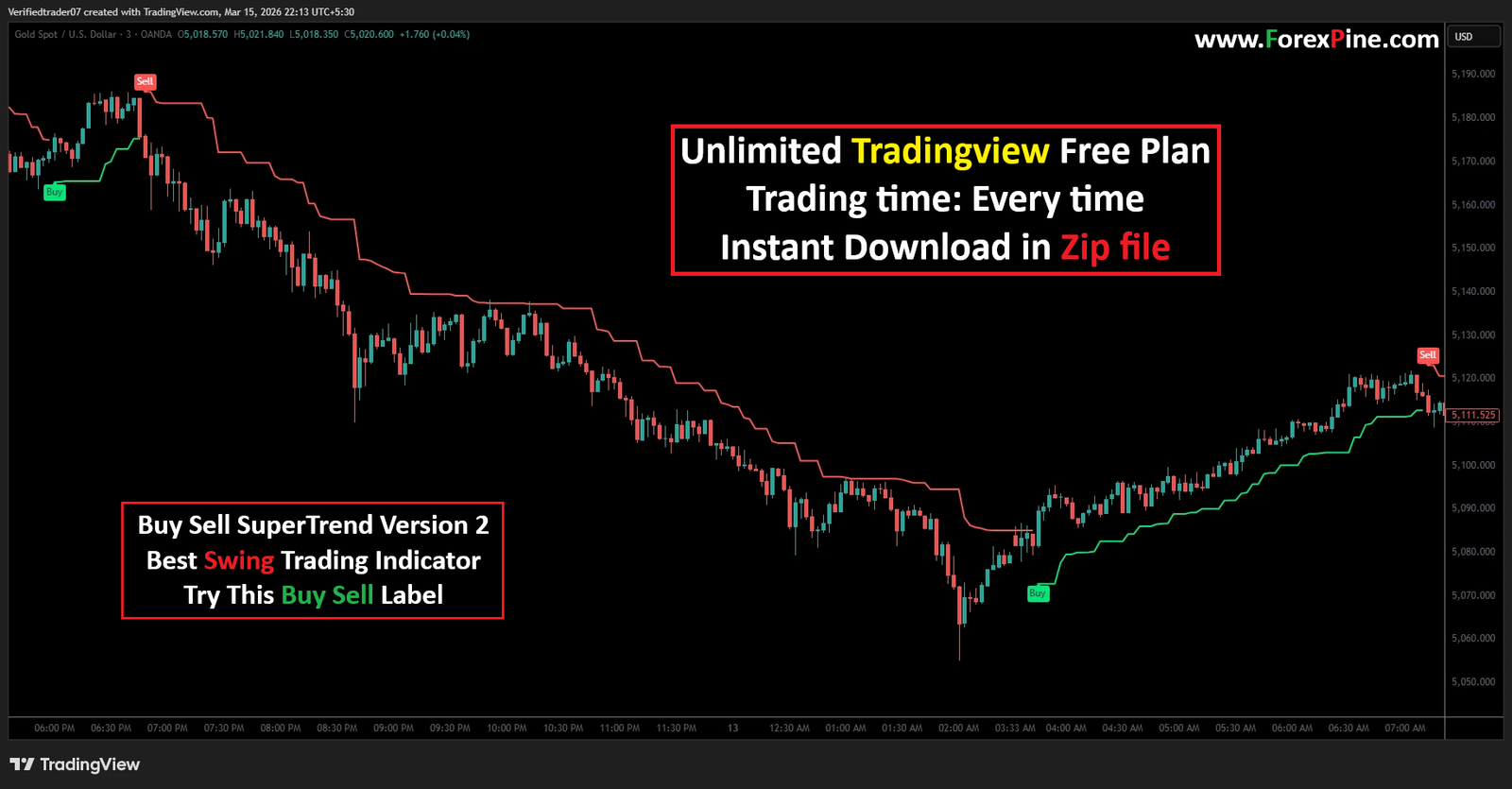
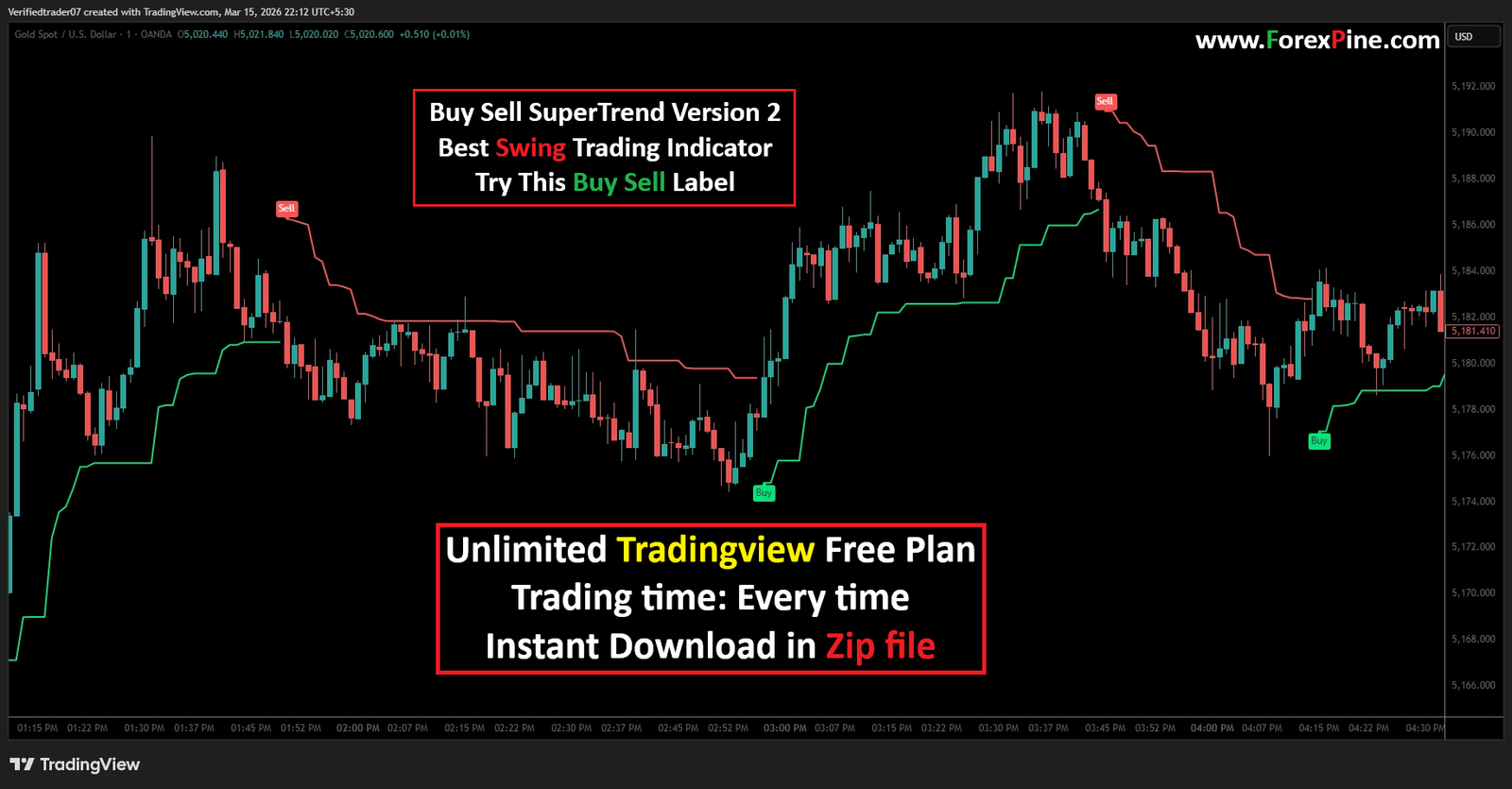
In essence, the indicator uses a color-changing line and labels to signal trend direction. Green signals an uptrend, and red signals a downtrend. The most basic strategy is to follow these signals: buy on green, sell on red.
- Entry: Look for short-term entry, such as buy or sell, in the direction of the overall trend indicated by an Arrow indicator. This rule advises that trades should be taken in the same direction as the established long-term trend to increase the probability of success.
- Entry Confirmation: Enter trades when the Arrow confirms your signal, ensuring that risk-to-reward ratios are favorable. This emphasizes the need for a secondary confirmation from the indicator and the importance of a positive risk-to-reward ratio, where potential profit outweighs potential loss.
- Exit (Profit): Set tight profit targets (e.g., 15-20 pips) and adhere to them strictly. This rule outlines a disciplined approach to taking profits, recommending small, fixed targets, which is a common characteristic of scalping or short-term trading strategies.
- Exit (Risk Management): Also, use stop-loss orders to manage risk and protect capital. Consider trailing stops to lock in profits as the trade moves in your favor. This highlights the crucial role of risk management through the use of stop-loss orders to limit losses and trailing stops to secure profits on winning trades.
Reviews
There are no reviews yet.